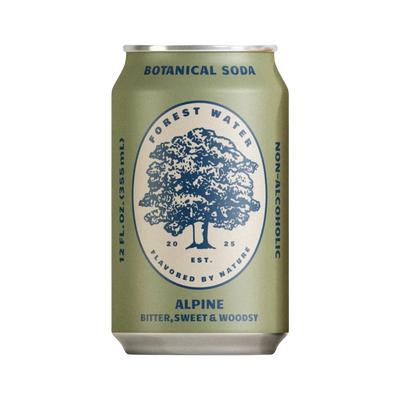
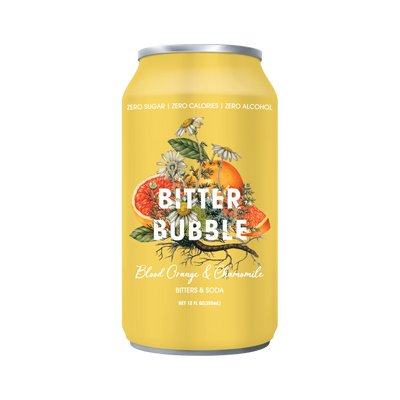
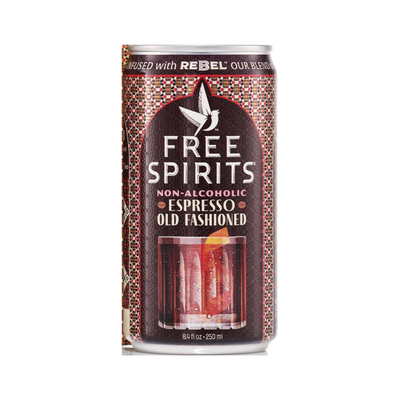
Pick up a "functional" drink and read the front out loud. Calm. Clarity. Focus. Mood. A little lift. The can is making you a promise, and it is making it in adjectives. Now turn it around. The back of the can is where that promise has to meet two things it would rather avoid: the law, and the dose. The gap between the front and the back is the whole story, and it is wider than the marketing wants you to notice.
We read a stack of these labels and checked them against what the research actually requires and what regulators are about to do. Here is what we found, and at the end, how to read one yourself in about thirty seconds.
Most functional drinks contain real ingredients at doses too low to produce the effect the can implies, worded carefully enough to stay legal.
The ingredients are real. The doses are not.
Start with the part nobody prints in big type. The active ingredients in these drinks are usually real. The amounts are usually too small to do anything.
CBD is the cleanest example, because the number is clean.
That is not a calming dose. It is a gesture in the direction of one, printed on a can that costs six dollars.
Adaptogens and nootropics, the ashwagandha and rhodiola and L-theanine and lion's mane crowding the label, tend to follow the same pattern. The doses are often a fraction of what the studies used, and frequently you cannot even check, because they are hidden inside a "proprietary blend." A proprietary blend lists the ingredients but not the milligrams. It is a way to put a famous ingredient on the label without committing to a working amount in the can. When you see one, assume the amounts are small, because if they were impressive, the brand would print them.
The newest version of the trick is sold as an upgrade. Stack six trendy actives into a single can, each at a sliver of its effective dose, and the label looks loaded while the drink does almost nothing. More names, smaller doses. A longer ingredient list is not a stronger drink. Often it is the opposite.
Why the can talks like that
Once you notice the doses, the wording starts to make sense, because the wording is engineered. There is a legal line running down the middle of every functional label, and the copy is built to sit right on the safe side of it.
The line is drawn by the FDA. A drink is allowed to make what is called a structure/function claim: "supports a calm mood," "helps maintain focus." It is not allowed to make a disease claim: "treats anxiety," "cures insomnia." The moment a beverage claims to treat a condition, it becomes, in the eyes of the law, an unapproved drug, which no canned drink can legally be. So the vague verbs are not lazy writing. They are legal armor. "Supports calm" is doing a specific job. "Treats anxiety" would get the product pulled.
The vaguer the verb, the harder the brand is hugging the line.
Here is the tell, and it works on any label you will ever pick up:
None of those words is a promise. They are the sound a brand makes when it wants you to hear "this will fix it" while saying nothing it could be held to.
There is a second referee, too. The FTC requires that claims be substantiated, that a company actually have evidence for what it implies. For most of these feel-good claims at these doses, that evidence is thin to nonexistent. The claims survive not because the science backs them but because enforcement has been light. That is a gap, and gaps close.
The rules are about to change, some on a deadline
Which is the part that makes this worth your attention now rather than someday. The loose era that built this category is ending, and parts of it are ending on a schedule. Four things are moving at once.
The pathway that lets brands add novel botanicals without running them past the FDA first, known as self-affirmed GRAS, is on the chopping block. The agency signaled in 2025 that it wants to eliminate it, which would force formal approval for new ingredients and raise the barrier to entry enormously. It faces a legal fight over whether the FDA even has the authority to do it, so it is not certain, but it is the kind of change that quietly reshapes a whole shelf.
Kava, the relaxant in a lot of these drinks, is perfectly legal as a plain tea. But the FDA's position is that the moment you carbonate it, sweeten it, or blend it with other botanicals, it stops being a tea and becomes an unapproved food additive, which makes the drink legally adulterated. A federal court in New York upheld a kava-bar ban on exactly that reasoning. The uncomfortable part for the rest of the shelf is that the same logic points straight at the ashwagandha in your sparkling wellness can.
The buzzy hemp-THC drinks at the corner store exist because of a loophole in the 2018 Farm Bill, which defined hemp by its delta-9 THC content by dry weight. A watery beverage can carry an intoxicating dose and still pass that test as legal hemp. That loophole expires. Under Public Law 119-37, on November 12, 2026, those products stop counting as hemp and fall under the Controlled Substances Act as marijuana. The rollout is still messy, the FDA had not even published the required list of covered cannabinoids as of May 2026, but the deadline is on the calendar, and a lot of products are standing on the wrong side of it.
The CDC reported in 2026 that poisonings tied to kava products spiked alongside kratom, with serious outcomes doubling since 2011, and in 2025 the FDA asked the Justice Department to classify a concentrated kratom compound, 7-OH, as an illicit substance. "Natural" and "feel-good" are doing a lot of work on these labels, and the safety data is starting to push back.
Put it together and the picture is simple. A category built on a permissive moment is about to meet a stricter one. That is precisely the moment it helps to be buying from someone who reads the labels and tracks the rules.
How to read a functional label in thirty seconds
You do not need a pharmacology degree to navigate any of this. You need five questions, and they fit on a screenshot.
- Does it show the actual milligrams, or hide them in a "proprietary blend"? No numbers is the first red flag.
- Is the headline ingredient at a real dose? Look the dose up once and compare. The studied amounts for these actives tend to run into the hundreds of milligrams (CBD's calming effect sits around 300). If the can has a tenth of that, the ingredient is there for the label, not for you.
- What verb is the claim using? "Supports" and "helps" are hedges. Nobody using them is promising a result.
- Is the lift coming from something intoxicating? If the buzz is hemp-derived THC, know that you are drinking an intoxicant, and that its legal status has an expiration date.
- Is the real value the ritual, not the pharmacology? Often the honest answer is yes. That is fine, as long as you know it going in.
What we are not saying
Now the part we would be cheating you to leave out. Under-dosed is not the same as useless, and we are not telling you the whole category is a scam.
Some brands dose honestly. They print their milligrams, they put real actives in at real amounts, and they are the ones worth buying. The problem on this shelf is the marketing, not the molecule, and the two are not the same thing.
And even when the pharmacology is thin, the drink can still earn its place, for two reasons that have nothing to do with the ingredient list. The first is ritual. A deliberate, good-tasting drink to mark the end of the day is a real cue, and your body answers it whether or not there is rhodiola involved. The second is the obvious one hiding in plain sight: you are not drinking alcohol. That is the actual benefit doing most of the work in the glass. Ritual plus the absence of a hangover plus a little placebo is a real stack, even when the ashwagandha is just along for the ride.
We will say the uncomfortable thing plainly, because it is the only way this post means anything. Bespoke sells in this category. We are teaching you to see through marketing we ourselves operate inside. We would rather lose a sale to an informed shrug than win one on a claim that does not hold up to the back of its own can.
So that is the detector. Use it on every can you pick up, including ours. The goal here was never to make you trust us. It was to make you harder to fool, which over time amounts to the same thing.
If you make these drinks, that detector is also the bar. If your claims outrun your doses, or your lift depends on a loophole with a 2026 expiration date, you will not make our shelf, and that is the point of having one. The brands we carry can show their milligrams and survive the rules that are coming.
Anyone can put "calm" on a can. We are interested in the ones that can prove it, and that will still be legal in 2027.
We read the labels so you do not have to.
See the ones that passed