In January 2025 the US Surgeon General issued an advisory naming alcohol a leading preventable cause of cancer in America and calling for a cancer warning on the label. Two years before that, the World Health Organization put its own line in The Lancet Public Health: when it comes to alcohol and your health, no amount is safe. Cable news ran the segments. Your most forwarding-prone relative forwarded the article. And if you ask the official story why Americans are drinking less than they have in generations, this is the answer you get. The science got scary, and people finally listened.
It is a tidy story. It is also, on the evidence, backwards.
The warning nobody was waiting for
Start with the numbers. In July 2025, Gallup reported that 54 percent of American adults say they ever drink, the lowest reading in a trend that goes back roughly ninety years. The decline is concentrated among younger adults, and it has been underway since the early 2010s, more than a decade before the Surgeon General reached for the label.
The behavior moved a decade before the warnings arrived.
Here is the problem that creates for the risk story. Through the years when young adult drinking was falling fastest, the long-running surveys that track how dangerous young people believe drinking to be barely moved. The behavior collapsed while the perceived risk sat flat. Whatever was emptying the glasses, it was not fear of the glass.
The beliefs did eventually shift, but note when. Gallup now finds a record share of adults, a bit over half, saying even moderate drinking is bad for your health. A decade ago that figure was in the twenties. So the behavior moved first and the belief followed roughly ten years behind. That is not what persuasion looks like. That is what rationalization looks like: people who had already cut back going out and finding themselves a reason.
Which fits something you already know about human beings. Nobody rearranges Friday night over a probability that pays out in thirty years. People rearrange Friday night over something they can feel by nine the next morning.
The cost you can feel by 9 a.m.
The felt cost has two parts, and both turn out to be real chemistry rather than vibes.
The first is the 4 a.m. dread that has picked up a name, hangxiety. Alcohol works by turning up GABA, the brain's brake pedal, and turning down glutamate, the gas. Your brain does not like being overridden, so while you drink it quietly recalibrates in the opposite direction. Then the alcohol leaves, the recalibration stays, and you wake up in the small hours with too little brake and too much gas. The racing heart and the free-floating shame are not a character flaw. They are a rebound, and researchers have measured it.
The second is sleep. Alcohol is a sedative, which is not the same thing as a sleep aid. It knocks you out fast, then fragments the back half of the night and suppresses the REM sleep that does the useful work. Eight hours in bed, five hours of sleep, and a morning that feels like a down payment on nothing.
For most of drinking history this cost was real but unmeasured, so it was easy to shrug off. Then the wrist got involved. WHOOP, the fitness wearable company, has reported that its members' recovery scores run about 8 percent lower on average the day after drinking, the worst of any behavior its members log. That is one company's data, and a company that sells recovery scores at that, so hold the exact number loosely. But the direction agrees with decades of sleep lab research, and more to the point it agrees with the number on the screen when you wake up. The hangover stopped being a feeling you could argue with and became a score you could not.
Nobody quits over a probability. Everybody notices a bad Tuesday.
The morning got expensive
Here is the part the warning-label story misses completely. Hangovers did not get worse. Mornings got more valuable.
A generation ago, the standard Saturday morning was built for recovery: couch, cartoons, grease. A rough Friday night cost you almost nothing because the morning after was already priced at zero. Now look at what the morning is asked to hold. The 6 a.m. gym slot. The run club that has quietly replaced the bar as a place to meet people. The 8:30 video call with your camera on and your face on record. The side project that only gets its hour before work. The morning went from a landfill for the night's consequences to prime real estate, and drinking is a tax paid entirely in morning.
Seen that way, the generational pattern stops being a mystery. Younger drinkers are not running a health calculation about their liver in 2055. They are running a price calculation about their Tuesday at 9 a.m., and the price went up. The same trade that cost a couch morning in 1998 now costs a workout, a sharp meeting, and a recovery score that follows you around like a conscience.
What we are not going to tell you
Now the part most articles on this subject leave out. The new anti-alcohol science is contested, and you deserve to know that.
The collapse of the old idea that moderate drinking protects your heart rests heavily on a 2023 meta-analysis by Zhao, Stockwell, and Naimi that re-ran decades of studies to correct the sick-quitter problem, the fact that "abstainer" groups were full of people who had quit drinking because they were already unwell, which made moderate drinkers look healthy by comparison. It is serious work. It is also still being argued about by serious people, and the honest reading is that the health question moved from settled-in-alcohol's-favor to genuinely open, not from settled to settled the other way.
The felt-cost story has its soft spots too. Wearable data comes from companies with something to sell. Expectation shapes how bad a morning feels. If we told you the case against every drink was closed, we would be doing to you exactly what the wine-is-heart-medicine headlines did in 1991, just pointed the other way.
What holds up without any of that: the decline is real, it started years before the warnings, and when people who cut back explain themselves, they talk about sleep, anxiety, money, and mornings. Felt costs. Not biopsies.
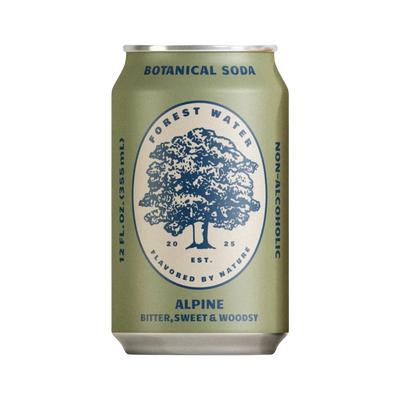
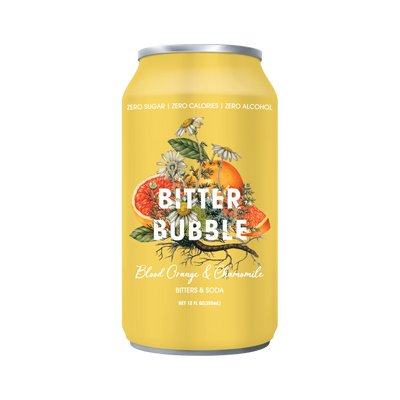
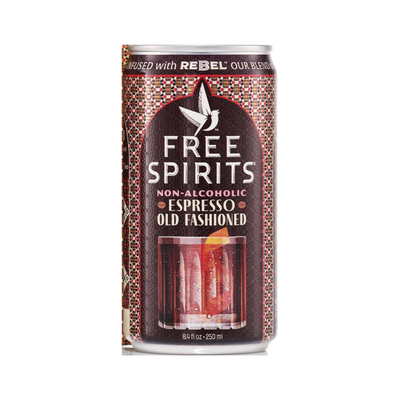
Which tells you what the good non-alcoholic shelf actually is, once you strip the wellness paint off it. It is not virtue in a can, and it is certainly not a lecture. It is Friday night with Tuesday taken off the bill. The whole category exists because a few million people did the morning math and went looking for a drink that lets them keep the round, the toast, and the third act of the night without co-signing for the 4 a.m. rebound.
The catch is that most of what fills that shelf is not good enough to make the trade feel free, and a bad substitute is worse than none. So that is the job we gave ourselves: taste through the category, keep the short list that holds up in the glass, and skip the rest.
We spend our time finding the ones worth waking up for.
See what made the shelf